How Rap and Club Music Became Part of Online Casino and Betting Brand Identity
Hip-Hop and Club Beats: How Betting and Casino Brands Build Identity
Gambling brands once tried to sound like banks. They preferred polished language and silence between words. Then the phone became the venue. A new audience arrived with earbuds in, raised on mixtapes, festival sets, and the looped pressure of the club. They did not want a lecture. They wanted a mood: quick, legible, and shared.
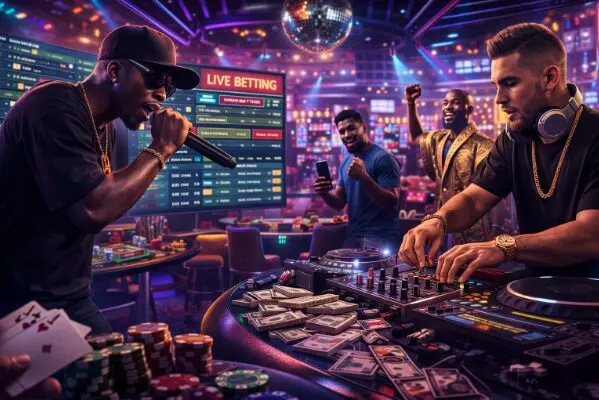
Hip-hop and club music delivered that mood and, quietly, its rules. The hook taught brevity. The beat taught pacing. The visuals of nightlife taught how to frame desire without explaining it. In online casinos and sports betting apps, sound and style now function as identity, not garnish.
The Beat That Makes a Stranger Feel Like “Us”
Rap and club music travel well because they are social by design. A drum pattern implies a room, even if the listener is alone.
Brands borrow that implication to turn a cold interface into a place with temperature. Sound makes the decision to stay feel natural.
Hip-Hop’s Vocabulary of Confidence
Hip-hop branding is not only about using popular tracks. It is about adopting a tone that feels self-authored. The voice says: We know who we are.
That tone shows up in three places:
- Short, caption-like copy that reads fast on a phone.
- Bold typography and hard edits that mimic the rhythm of a verse.
- A visual world built from night lighting, close-ups, and quick reveals.
The result is a brand persona that feels direct and unembarrassed, the same qualities that keep rap lines memorable.
When the Casino Learned From the Club
Casinos have always curated atmosphere, but digital gambling forced that atmosphere into a smaller box: the phone screen. The quickest way to make the box feel alive is to borrow the club’s toolkit: loops, bright accents, and sonic cues that signal reward.
In many casino interfaces, a slot win is not silent. The sound is part of the message, tuned to cut through a noisy room and still land on cheap speakers. A banner pulses, then it whispers “Check it out,” and the invitation feels less like instruction and more like a dare. The rhythm does emotional work that a paragraph of copy cannot do. It turns waiting into anticipation, and anticipation into a habit.
Sonic Branding, Not Background Noise
In marketing language, sound used to be “music choice.” Increasingly, it is treated as architecture. The goal is recognition: a few notes that say “this is us” before a logo appears.
For casino and betting apps, that identity can include:
- A short sonic mark for ads and push videos.
- A consistent palette of UI sounds for taps, wins, and confirmations.
- A longer “brand bed” for streams, promos, and social clips.
The disciplined versions resist chasing every trend. They keep a stable spine, then borrow fashionable textures around it, the way a producer updates a drum kit without changing the groove.
The Social Feed as a Dancefloor
Online communities react to the feeling in the first three seconds. That is why betting and casino ads often cut like music videos: light, motion, and a beat that tells you how to feel before you decide what you think.
The same logic shapes influencer content. A creator doesn’t explain the product in a paragraph. They show it inside a lifestyle: match night, watch party, late taxi ride, neon reflections on glass. Club aesthetics make the scene familiar, and familiarity lowers the effort required to engage.
Sports Betting Borrows the DJ’s Timing
Sports betting has its own rhythm: pre-match calm, live spikes, then the long exhale after the final whistle. Brands use club logic to make those phases feel continuous, like a set that never loses energy.
Odds and stats become the “build.” Cash-out prompts and live markets become the “drop.” In that flow, a bettor scrolling this site is not only looking for a wager, but for proof that the platform understands the game’s tempo. The second screen becomes part of the ritual: checking line movement, comparing markets, watching the minutes shrink. The music-coded aesthetic makes numbers feel like atmosphere, which is why it thrives during football nights, UFC cards, and big wrestling shows.
After the Track Ends, the Mood Remains
Sound does more than decorate. It tells you where you are and who is welcome there. It also tells you what kind of time is being sold: slow and luxurious, or fast and bright, or sharp enough to feel like luck.
Hip-hop and club music became part of the gambling brand identity because they compress meaning. They carry confidence, speed, and community in a form that the internet can move quickly. A user does not need to study the interface to understand the promise; the groove does the explaining.
The strongest brands treat music as a discipline, not a costume. They choose a tempo that matches how their product is actually used: short sessions, quick checks, sudden surges around a goal, a knockout, a finish. They keep a recognizable sonic spine, then vary the texture the way a producer changes the kit without changing the pulse. Over time, this repetition becomes memory. A few seconds of sound can pull someone back into a familiar state, the way a chorus returns you to a night you thought you’d forgotten.
There is also a moral test hiding in the mix. When the borrowing is lazy, the result is caricature: slang without weight, nightlife without life. When the world is coherent, the borrowing turns into craft. The aesthetic feels inhabited, not pasted on. The user senses that difference even if they can’t name it.
What remains after the track ends is not only the beat. It is the shape of attention the beat trained: the expectation of motion, the hunger for the next moment, the comfort of belonging to a crowd you cannot see. In that sense, music is not an accessory to branding. It is the doorway.