Volleyball Positions Explained: Your Guide to the Game
Volleyball Positions in Tanzania
Volleyball Positions give structure to the game in Tanzania, and that is why every volleyball player should learn how a rally is organized before trying to master advanced technique. Good volleyball player positions make the court easier to read and Spinbetter promo code more profitable. A clear volleyball position also reduces confusion during rotation, service receive, and transition play.
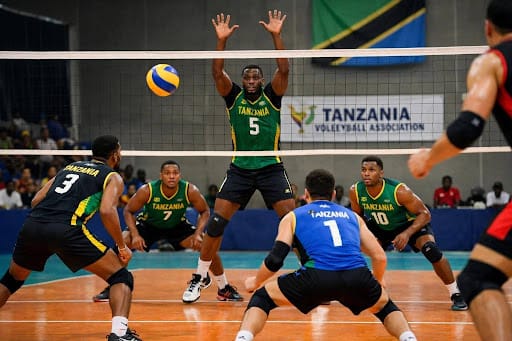
Rotation, position on the volleyball court, and movement basics
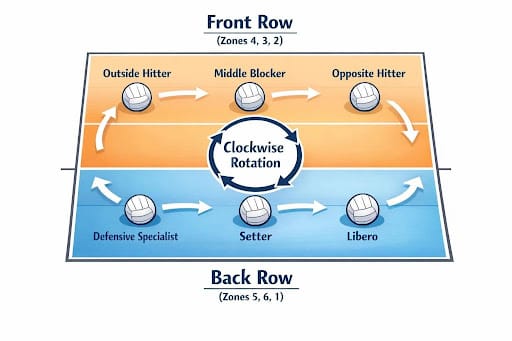
The simplest place to begin is the starting map. A lineup has six players, and they must begin each rally in legal order. After winning back service, they rotate clockwise. That pattern is the basic form of rotation, and it determines where an athlete stands before the serve, not where that person must stay after contact.
| Role | Usual area | Main task | Best known for |
| Distributor | target zone | direct the next contact | vision |
| Left pin scorer | wide left lane | finish and support reception | balance |
| Central jumper | middle lane | close angles and run speed plays | timing |
| Right pin scorer | weak side lane | score from the far pin | power |
| Rear-court specialist | deep area | stabilize first contact | control |
| Tactical reserve | support zone | improve late-rally calm | reliability |
These are the main positions on the court, but real play begins after the serve. Movement follows function. That is why learning the different positions matters more than memorizing a frozen diagram. A legal starting spot matters, yet the real purpose of a position on the volleyball court appears once the rally opens.
Three practical ideas help beginners most:
the front and back row have different limits and duties
a smart teammate moves early rather than late
athletes must communicate before and after first contact
Those habits build shape, and shape builds confidence.
Setter, second touch, and team’s offense
The setter is usually the organizer of the rally. This athlete tries to take the second touch, read the defense, and set the ball where the next contact can do the most damage. In most systems, that job makes this role the center of the team’s offense.
The best organizers usually share several traits:
quick feet on broken first contacts
steady judgment in a tense situation
enough touch to deliver a clean release
willingness to lead the group without panic
| Quality | Why it matters |
| Fast movement | saves off-target passes |
| Calm vision | finds better options |
| Precise touch | improves hitting rhythm |
| Leadership | steadies the side |
A skilled organizer helps an entire lineup look smoother, because every attacking option becomes more believable.
Outside hitter, also known as the left-side, and all-around responsibility
The outside hitter is often the most complete athlete in a lineup. This role attacks from the left edge, helps receive the serve, and stays involved in both transition and coverage. It is also known as the left-side, and in many coaching guides it is simply known as the left-side hitter because so much of the action starts there.
This role carries a heavy responsibility. The outside hitter must help in reception, recover quickly, and still be ready to hit the ball or place a controlled shot against a formed wall. That mix makes the role highly versatile. Many trainers place their most reliable all-around athlete here because the job touches nearly every rally phase.
A strong edge scorer usually has these traits:
confidence to attack the ball from high, awkward sets
enough patience to vary the shot rather than force power
good awareness during offense and defense
discipline to cover after the swing
In practical terms, this role often looks like the best balance between power and problem-solving.
Middle blocker, middle hitter, and quick attacks
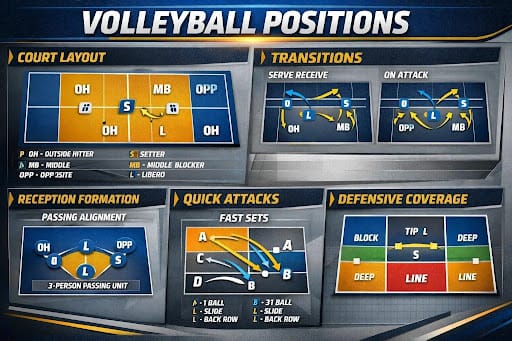
The middle blocker controls the central corridor. This athlete is often the tallest figure near the tape, yet height alone is not enough. Timing, reading speed, and jumping ability matter just as much. Many coaches also use the label middle hitter when describing the same central attacking function.
The main role here is twofold. First, close space in the middle and help shape the first wall against attacking lanes. Second, run quick attacks that pressure defenders before they are fully organized. This is why the role is so vital in modern systems.
| Central-lane duty | Value for the lineup |
| Read the organizer early | improves reaction time |
| Move laterally | helps both edges |
| Jump on time | takes away angles |
| Run fast patterns | creates hesitation |
The best central jumper does not simply leap high. This athlete reads early, lands under control, and moves again without delay. To excel here, a person usually needs explosive feet, discipline, and willingness to work through repeated transitions.
Libero, defensive specialist, and back-row control
The libero is the easiest role to identify. Athletes wear a colored jersey. In plain terms, liberos enter to stabilize reception and floor work. A similar but more situational role is the defensive specialist, who may appear during a specific passing sequence or tactical switch.
These jobs matter because not every athlete is built for the same task. A rear-court expert may not score above the tape, but that person can rescue rallies with clean first contacts and sharp reads. This is why many people call the libero a specialized position: the aim is not broad variety, but elite control in one phase.
A few core duties define this part of the lineup:
read the hitter’s shoulder line and dig driven contacts
cover short space in the back row
stay calm during serve pressure
enter a planned substitution or tactical change when needed
The libero differs from a standard reserve because the rules allow a special pattern of movement in and out.
Opposite hitter, right-side hitter, and offensive balance
The opposite hitter works from the weak pin and gives the lineup a major scoring option on the right side. This role is often described as the right-side hitter, especially when a coach wants to highlight attacking geometry rather than rotation order.
This role matters because attacks from that lane change the angle of pressure. A strong attacker on the weak side can score even when the left edge is crowded. In many systems, this is a high-value offensive role because the swing path is different and the release can arrive quickly.
To succeed here, an athlete often needs several qualities. The person should be able to jump high, stay balanced on awkward sets, and adjust when the pass pulls the organizer too far from target. Power helps, but so does discipline. On difficult points, a controlled shot is often better than a reckless one.
A good weak-pin scorer also supports shape in transition, because the role balances the floor and stops the attack from becoming too predictable.
Coach guidance, volleyball skills, and how to choose the best fit
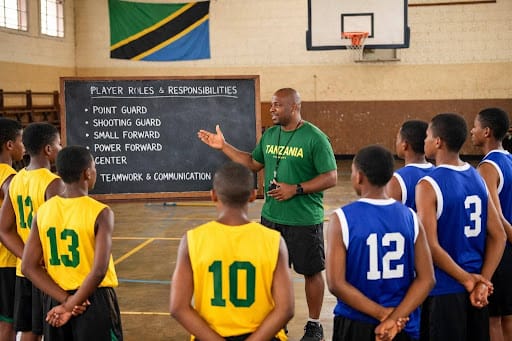
A coach should not assign roles by height alone. The most useful volleyball skills for sorting roles include:
calm decision-making under pressure
steady feet in transition
reliable first contact as a passer
timing near the tape
readiness to move from the front row into a new task after service
Some broad patterns help. A calm organizer may fit distribution. A powerful edge scorer may suit the left lane. A quick central jumper may fit the middle. A composed floor reader may thrive as libero.
What matters most is fit, not labels. The right role lets an athlete grow faster because training becomes specific.
Common errors and how positions explained clearly help you understand the sport
Beginners often make the same mistakes. One error is treating a role like a fixed dot rather than a moving function. Another is assuming highlight plays are more important than clean first contacts. A third is waiting too long to move after service.
A few problems appear again and again:
forgetting that the front row and back-row phases demand different decisions
chasing every contact instead of trusting the nearest athlete
losing shape because nobody calls the next action
This is where positions explained well can genuinely help you understand the sport. Once the duties are clear, the game becomes less overwhelming. You stop guessing and start reading patterns.
Why volleyball player positions matter in competitive play
At a recreational level, broad effort can hide structural flaws for a while. In a more competitive setting, structure matters much more. If a lineup cannot pass cleanly, the next option becomes predictable. If the central jumper arrives late, edges open. If the weak pin offers no threat, defenders can overload the other side.
That is why volleyballer positions matter so much. They turn a loose collection of athletes into a coordinated unit. Each volleyballer does not need identical strengths. Instead, the lineup works because each role supports the next one.
Final thoughts on volleyball position and game understanding
A clear volleyball position gives an athlete more than a starting spot. It creates purpose. The game becomes easier when the organizer knows the next action, the edge scorer understands timing, the central jumper closes the lane on time, and the rear-court specialist keeps first contact under control. That structure is what makes the sport so satisfying to learn.
For beginners in Tanzania, this knowledge builds confidence quickly. For developing clubs, it improves training quality. For advanced groups, it sharpens decision-making and spacing. Once the roles are clear, rallies feel less chaotic and much more readable.
FAQ
What does a newcomer usually learn first?
Most newcomers start with movement, service, and safe first contact before moving into a more specific role.
Why does one athlete wear a contrasting shirt?
That usually identifies the libero, whose job centers on reception and floor coverage.
Is the weak pin always a power role?
Not always. Control, timing, and smart choices matter as much as force.
Does every lineup need a tactical reserve for passing?
Not in every format, but many squads benefit from one, especially in tight sets.
Can one athlete switch roles over time?
Yes. Growth, confidence, and training often change which fit makes the most sense.